
Industrial buildings, especially large-scale sites between 50,000 and 150,000 square feet, are the backbone of modern logistics, manufacturing and warehousing. Running a site of this size smoothly requires meticulous planning and regular maintenance. Unlike smaller facilities, these buildings have complex infrastructure, significant utility demands, and strict regulatory requirements.
In this blog, we explore the key operational, maintenance and compliance needs that industrial sites of this scale require every month to remain efficient, safe, and productive.
-
Structural and Building Maintenance
Buildings of this size experience substantial wear and tear due to heavy machinery, high foot traffic, and continuous vehicle movements. Monthly maintenance should focus on:
- Roof inspections: Large industrial roofs are prone to leaks and damage, particularly after severe weather. Monthly checks for water pooling, cracks, and gutter blockages can prevent expensive repairs.
- Flooring and loading areas: Concrete floors and loading docks bear heavy loads daily. Regularly inspecting for cracks, uneven surfaces, or oil spills can reduce accidents and equipment damage.
- Doors, shutters, and windows: Automated doors and loading bay shutters should be lubricated and tested regularly. Broken seals or faulty mechanisms can affect energy efficiency and security.
- Exterior inspections: Regular checks for wall cracks, facade damage, or water ingress prevent long-term structural issues.
Presence & Co. provides expert facilities management for industrial buildings, ensuring every inspection is carried out proactively and efficiently, preventing small issues from becoming costly problems.

-
HVAC and Environmental Controls
Heating, ventilation, and air conditioning (HVAC) systems are critical in large industrial buildings to maintain comfortable working conditions, protect sensitive stock, and meet health and safety standards.
Recommended monthly requirements include:
- Filter replacement and cleaning: Air filters capture dust and pollutants; neglecting them can reduce system efficiency and increase energy costs.
- System checks: Regular inspection of fans, ducts, chillers, and boilers ensures equipment is running efficiently and prevents breakdowns.
- Temperature monitoring: For buildings storing temperature-sensitive goods, monthly calibration of thermostats and sensors is essential.
- Ventilation inspections: Proper airflow reduces condensation, prevents mold growth, and ensures safe air quality for staff.
Consistent HVAC maintenance not only keeps employees comfortable but also protects equipment and inventory from environmental damage.
-
Electrical Systems and Lighting
A building between 50,000 and 150,000 sq ft will have an extensive electrical network. Monthly checks are vital to avoid outages or hazards:
- Panel inspections: Electrical panels should be checked for signs of overheating, corrosion, or loose connections.
- Lighting maintenance: Large warehouses and factories rely on extensive lighting. Replacing faulty bulbs, cleaning fixtures, and checking emergency lighting improves safety and efficiency.
- Power supply monitoring: Ensuring uninterrupted power supply to critical machinery prevents downtime and production delays.
- Backup systems: Monthly testing of generators and uninterruptible power supply (UPS) systems ensures they are ready in emergencies.
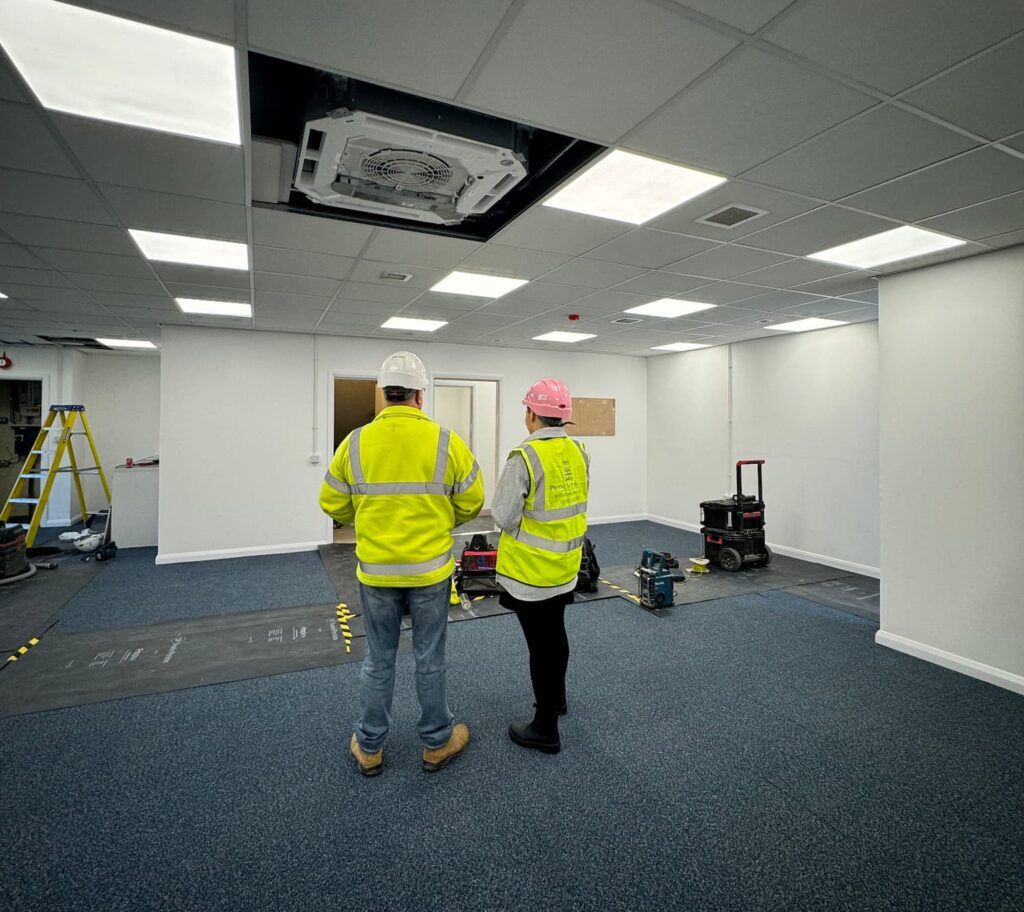
Presence & Co. handles all electrical maintenance internally, giving clients peace of mind that their building’s power and lighting systems are always safe and operational.
-
Fire Safety and Emergency Systems
Fire safety is non-negotiable in industrial sites, particularly when large inventories, flammable materials, or machinery are present. Monthly inspections should cover:
- Fire alarms and detectors: Test alarms and smoke detectors to ensure they are fully operational.
- Sprinklers and extinguishers: Check sprinkler heads for damage and replace or service extinguishers as needed.
- Emergency exits: Ensure exits are accessible, illuminated, and properly marked.
- Staff training refreshers: Monthly safety briefings can reinforce emergency procedures and evacuation plans.
Industrial sites of this size must adhere to stringent fire safety regulations. Regular monthly checks protect both people and property.
-
Security Systems
Large industrial buildings are often prime targets for theft, vandalism, or unauthorised access. Key monthly security tasks include:
- CCTV checks: Ensure cameras are recording and angles cover all critical areas.
- Access control audits: Verify that only authorised personnel have access to restricted zones.
- Perimeter inspections: Check fencing, gates, and locks for damage or weakness.
- Intrusion system testing: Regularly test alarms and sensors to ensure they function correctly.
Strong security systems reduce risk and provide peace of mind for site operators and clients.
-
Grounds and Exterior Areas
A 50,000–150,000 sq ft building usually sits on an extensive site with car parks, loading bays, and landscaped areas. Monthly maintenance should include:
- Parking and driveways: Inspect for potholes, debris, or oil spills that could damage vehicles or cause accidents.
- Landscaping and drainage: Regular maintenance prevents flooding, keeps the site presentable, and ensures proper drainage.
- Waste management: Check waste disposal areas to prevent contamination, pest infestations, or regulatory breaches.
- Snow and ice removal (seasonal): Ensures safety and accessibility for staff and deliveries.
Maintaining the external environment improves safety, operational efficiency, and overall site impression.

-
Compliance and Documentation
Industrial buildings are subject to numerous regulations, from health and safety to environmental standards. Monthly routines should include:
- Health & safety audits: Verify that equipment, machinery, and work practices comply with regulations.
- Permit checks: Ensure all necessary operational permits, environmental licenses, and safety certificates are current.
- Maintenance logs: Document all inspections and repairs to demonstrate compliance and track trends.
- Staff training updates: Ensure all staff are up to date on health, safety, and operational procedures.
Maintaining thorough documentation can prevent costly fines and streamline audits or inspections.
-
Operational Efficiency and Reporting
Finally, monthly assessments help industrial sites remain cost-efficient and productive:
- Energy monitoring: Track electricity, gas, and water usage to identify inefficiencies.
- Equipment performance review: Monthly reports can highlight machinery underperforming or requiring maintenance.
- Inventory and storage optimisation: Large sites benefit from monthly reviews of storage layout and logistics flow.
- Continuous improvement planning: Data-driven insights help plan upgrades or process improvements.
Regular operational reviews keep the building running efficiently and can save significant costs in the long term.

Conclusion
Presence & Co. offers comprehensive, in-house facilities management for industrial sites of all sizes, providing tailored solutions that reduce downtime, protect assets, and maintain operational efficiency. By trusting a team that handles everything internally, you can focus on what really matters, running your business.
Presence & Co. operates in line with current UK legislation and best practice guidance, including (but not limited to) health and safety regulations, building compliance requirements, and statutory inspection obligations. Services are delivered as required by law, with appropriate certification, record keeping, and contractor competence checks in place to support ongoing compliance.
Ready to take the stress out of managing your industrial site? Contact Presence & Co. today to see how we can keep your building safe, compliant, and operating at its best.

